Can you use ChatGPT on client tax work?
Pasting a client's bank statement into a chat window is a disclosure to a third party. What the TPB says about it, and where general AI actually helps a practice.

It's a Tuesday in May, a bit after nine. Somebody in the office has a rental client with a year of bank statements, forty-odd pages, and the transactions need sorting into rent, repairs, rates, agent fees and "no idea". They open ChatGPT, drag the PDF in, and type categorise these for a rental schedule.
It comes back in about fifteen seconds. It looks right. Most of it probably is.
Nobody in that office decided the firm uses AI on client files. It just started happening, one tired person at a time, and that is how it is happening in most practices right now.
So the question worth answering isn't whether the tool is clever. It is whether what just happened was allowed, and what it would take for it to be fine.
What just happened, in the Board's terms
The Tax Practitioners Board published its guidance on this in July — TPB(GS) 55/2026, on artificial intelligence and the Code of Professional Conduct. It does not ban anything, and it does not name a single product. What it does is apply the obligations you already have to a new way of breaking them.
The one that bites first is confidentiality. Under the Code you don't disclose a client's information to a third party without their permission, unless the law requires it. The guidance treats anyone other than you and your client as a third party, and says that putting client information into an AI tool can be a disclosure — "depending on how these tools are configured and used".
That qualifier matters, and it cuts both ways. A tool set up so that nothing leaves your control is a different animal from a personal account on a free plan. But the person at their desk at nine o'clock almost never knows which one they're using, and "I assumed it was fine" is not a configuration.
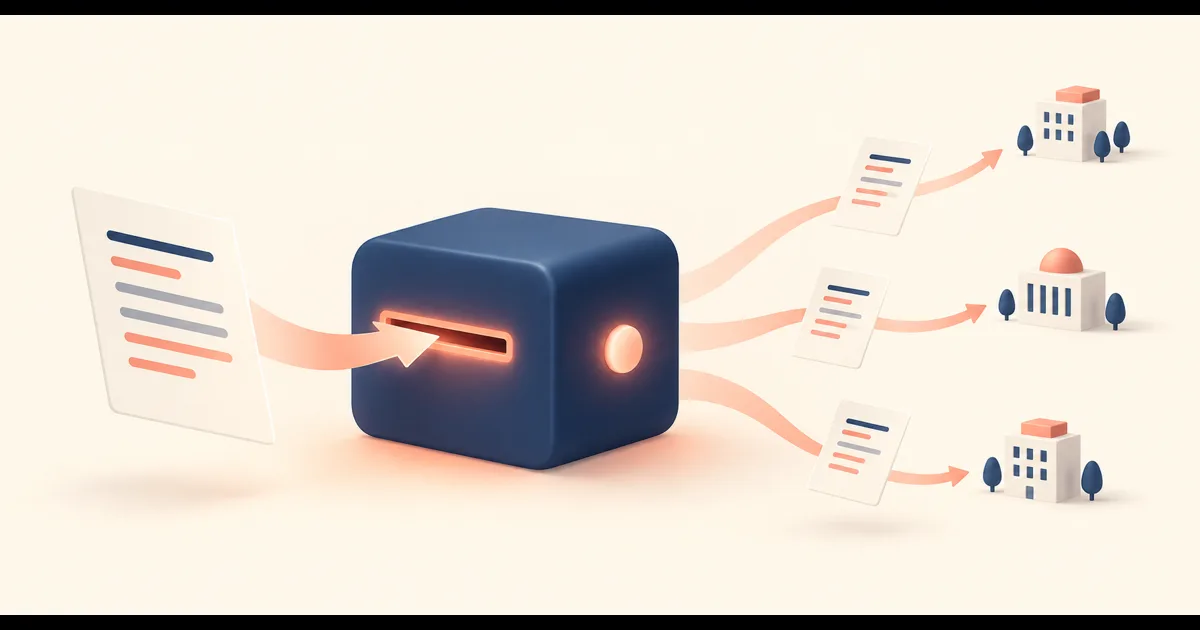
Three things the chat window doesn't tell you
Whose server it is on, and where. A client's statement carries their name, their address, their account number and a year of where they spend money. Once it is in a consumer chat product, you are relying on terms you probably haven't read, from a company whose data sits in a country you can't name, to decide what happens to it next.
Whether there was a TFN in it. There usually is, somewhere — a payment summary, a letter from the ATO clipped to the back of the pile. The guidance points out that TFNs bring their own separate obligations under the Privacy (Tax File Number) Rule, on top of everything else. A pasted PDF doesn't check.
What the client was told. Nothing, in the scene above. Which leads to the part most firms can actually fix this week.
Permission is usually closer than you think
The guidance is more practical here than people expect. It lists the forms a client's permission can take — a signed engagement letter, a signed consent, a fact-find, and, in the Board's words, "a general authority consenting to disclosure to third parties may also be acceptable".
So if your engagement letter already carries a general authority to disclose to third parties, you may well be covered for a tool you have chosen deliberately. What it does not cover is a tool nobody chose. A general authority is a permission you rely on; it isn't a licence for every staff member to pick their own AI provider in the middle of the night.
The Board also recommends — recommends, not requires — telling clients who you disclose to, where, where their data is stored, and whether AI is used. You can only say any of that if you know the answer yourself.
The part that isn't about privacy at all
Say the tool was set up properly and the client had agreed. The forty pages are categorised. Now what?
The guidance is plain that the work remains yours: you verify what the AI produced, you apply your own judgement, and you don't treat its output as a substitute for your own analysis. It goes further than most people have noticed — it says the verification and review should happen throughout the workflow, and that each step should be documented, to support your record-keeping and quality management obligations under the Code.
A chat transcript is a poor record of that. It shows what you asked and what came back. It doesn't show which lines you checked against the statement, which ones you moved from "repairs" to "capital", or who looked at it before it went into the working paper. When somebody asks in eighteen months how a figure was arrived at, "ChatGPT said so, and I think Priya looked at it" is not a file note.
And general chat models are confidently wrong in a very specific way on tax work. They will state a rate, a threshold or a cut-off date in exactly the tone they use for everything else, for a year they may not be talking about. That isn't a reason never to use them. It is a reason never to let a figure from one reach a return without a source you can point at.

Where general AI genuinely earns its keep
None of this adds up to "don't use it". It adds up to "use it where the client isn't in the prompt".
The honest list of things a general chat tool is good at in a practice, with nothing identifying pasted in:
- Drafting the awkward email. The third reminder about the missing rental statement, rewritten so it doesn't sound like the third reminder.
- Explaining something to a client in plain English — once you have decided the answer. It is a decent translator of your view. It is a poor source of one.
- Turning your rough notes into a query list for the client, or a checklist for a new staff member.
- Thinking out loud about a process. How to split the season's work, what a review checklist should cover, how to word a policy.
The line is easy to hold. If you wouldn't forward it to a stranger at a company whose terms you haven't read, don't paste it.
So what should a practice actually do?
Three things, none of which takes long.
- Decide which tools the firm uses for client work, and write it down. One line is enough. Everything not on the line isn't used on client files. This is the single change that turns nine o'clock improvisation into a decision the firm made.
- Read your engagement letter for the general authority. If it's there, you probably have the permission you need for the tools on that line. If it isn't, that's the paragraph to add before next season.
- Make the review leave a trace. Whatever the tool, the checking has to be visible afterwards — who looked, what changed, and why.
The TPB's AI guidance says more than this, and we've gone through what it asks of a practice section by section.

Where we sit in this
Full disclosure: we build one of the tools a firm might put on that line, so weigh this accordingly.
BeforeMay was built for exactly the job in the opening scene — a client's documents in, a working paper out — and around the three problems above. Every provider that touches a client's documents is named, with the country it processes in, on our privacy policy. Every figure in the working paper links back to the page it was read from. And the record of what the AI raised and what you did about it is kept as you work, rather than assembled afterwards. The detail, including what we don't do, is on the FAQ.
The review is still yours. That part doesn't change whichever tool you choose.