Build your first working paper
From an empty case to a finished Excel working paper — what to upload, when to press generate, and how to read what came back.
A case is one client, one financial year. Everything below happens inside it.
Create the case
On Cases, choose New case. You pick the client, the financial year and the return type — individual, company, trust or partnership.
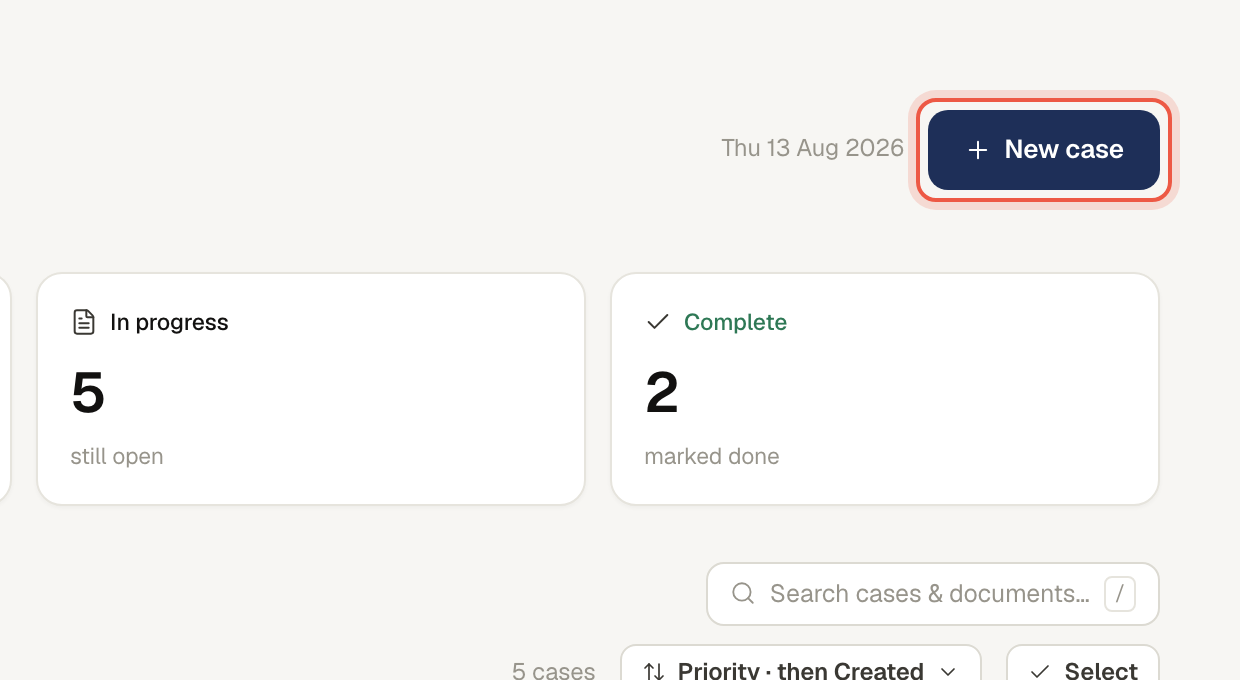
The return type is not cosmetic. It decides which working paper template gets filled and which checks run before delivery, so a case created as an individual will not produce a company workbook later.
Add the documents
Drop files onto the case, or use Browse files. Anything readable works: PDFs, photos of receipts, spreadsheets, bank statements.
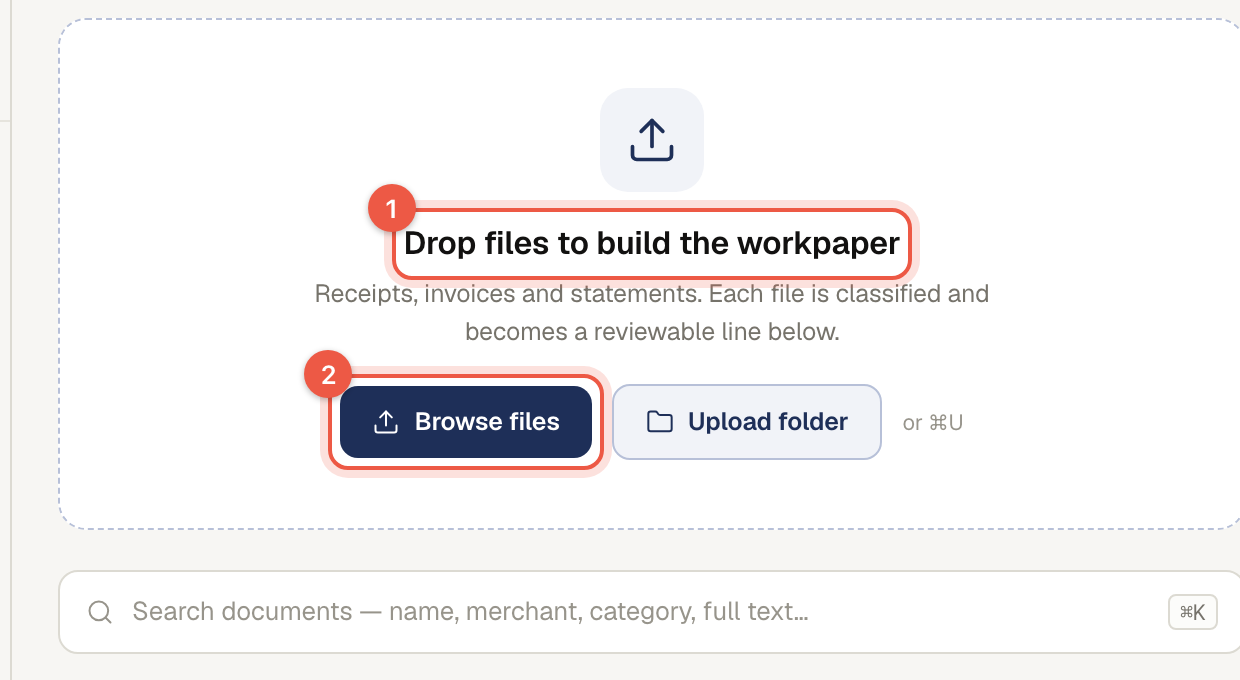
Each file shows Uploading & analysing while it is being read, and then settles with a suggested name and the period it covers. Wait for that to finish — a document still being read is not yet part of the case.
Two documents worth more than the rest
Last year's return and this year's ATO pre-filling report. The prior return is what lets the build notice that something claimed last year is missing this year, which is the single most common reason a working paper comes back from review.
Generate
Generate working paper sits at the bottom of the right-hand rail, under Lodgement readiness.
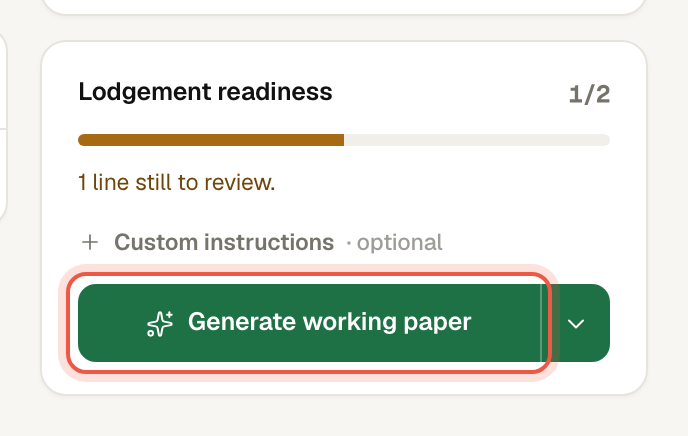
The case then shows AI is building the workpaper…. This is not instant — it reads every document in the context of every other one, fills the template, and runs a delivery gate over the result before you see anything.
If it needs a decision it cannot make for you, the case switches to AI is waiting for an answer and the question appears on the case. It waits. Nothing is guessed on your behalf.
Read what came back
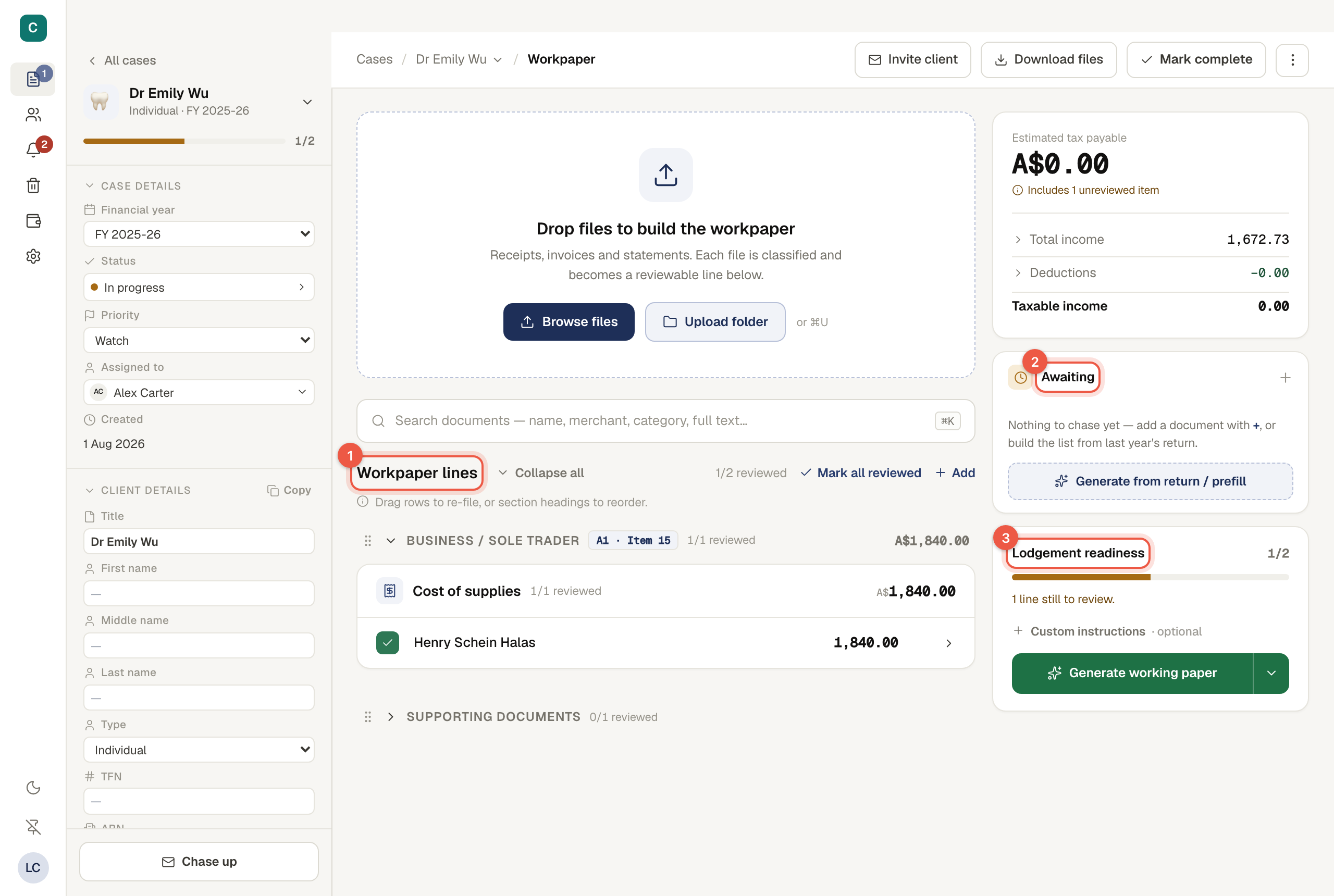
The case page is where you read it, and it is in three parts.
| What it holds | |
|---|---|
| Workpaper lines | Every figure the build produced, filed under its section and ATO item. Each line is reviewed or not. |
| Awaiting | Documents that are missing. Not review points — chases. |
| Lodgement readiness | How many lines are still unreviewed, and therefore how far off you are. |
Review points — a judgement the build made, with its reasoning — arrive in a panel beside the workbook. Each one takes a written Reply or an Ignore; Update working paper then reworks the affected figures with your answers in them.
The split between a review point and a chase matters. "This looks like a private-use apportionment" is a review point, and it is yours. "There is no June bank statement" is a chase, and it belongs in an email to the client.
Fix a figure without breaking the workbook
You can type into the workbook in the browser. Non-formula cells are editable; anything computed is locked, and the header reads Editable — formulas locked to say so.
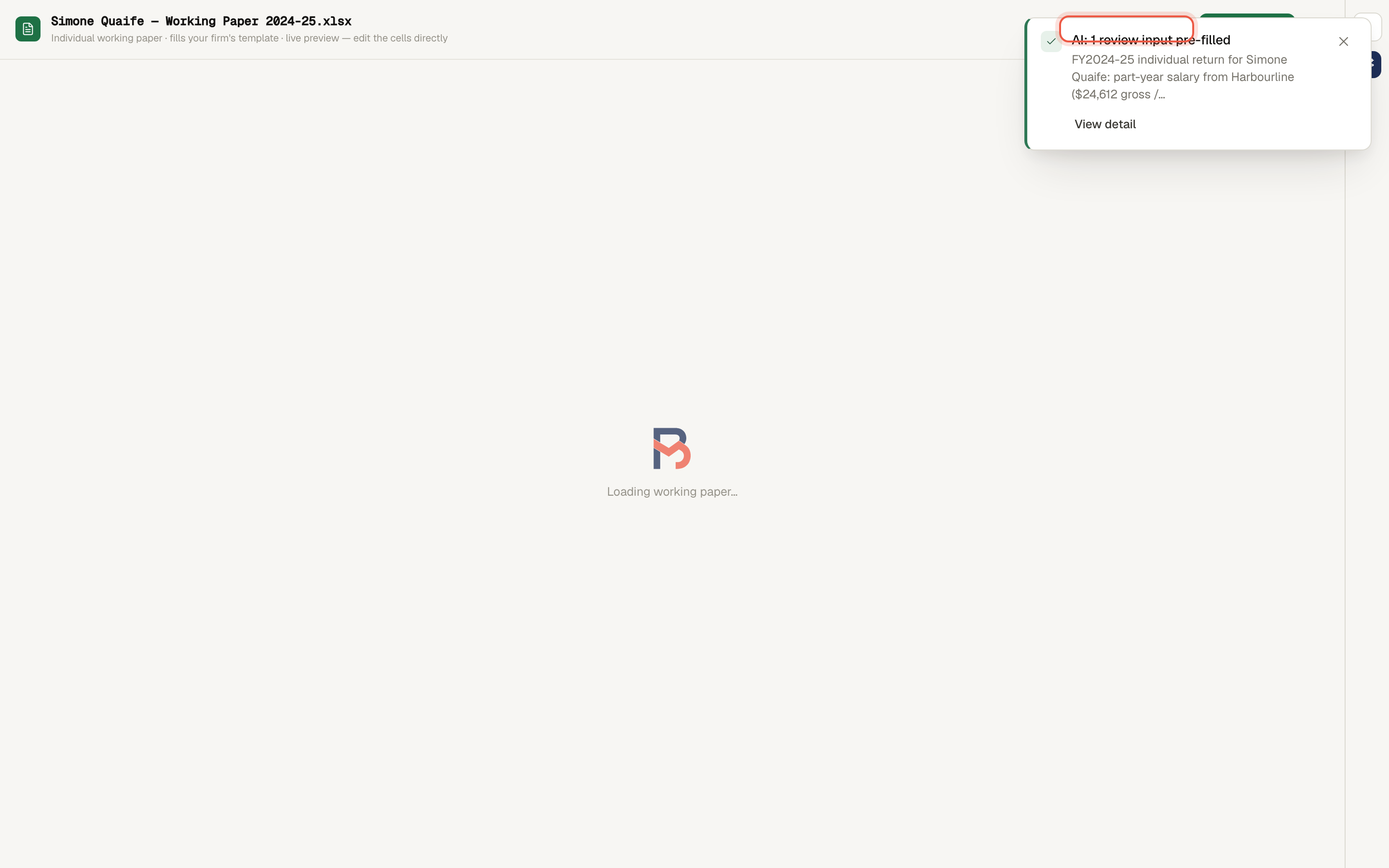
Edits are saved as a new version of the file, and a later re-run continues from the version you edited rather than from the original build.
Re-uploading changes the answer
Add or replace a document after a build and the case shows Documents changed — re-run to refresh. The figures on screen were computed from the old set until you do.
When it does not go this way
Check the review point on that line first — a wrong figure is usually a judgement you have not read yet, and the reasoning attached to it will name the document it came from. If the figure has no finding against it, the source document is the place to look: open it from the workbook cell and read what it actually says.
Leave it. A case in AI is waiting for an answer holds its place and consumes nothing further. Come back when the client replies.
Duplicates are detected by content, kept for the record, and excluded from the build. You do not need to delete them.
BeforeMay docs
How to turn a client's documents into a reviewed Excel working paper — building a case, reading what the AI flagged, and fixing a figure without breaking the workbook.
What to upload
Which documents change the quality of a working paper, which are optional, and what happens to a file the moment it lands.