Why clients send a year of receipts in one night
The 11pm receipt dump on 30 June is not a client failing. It is what a once-a-year request produces. How to ask for receipts so they arrive usable.
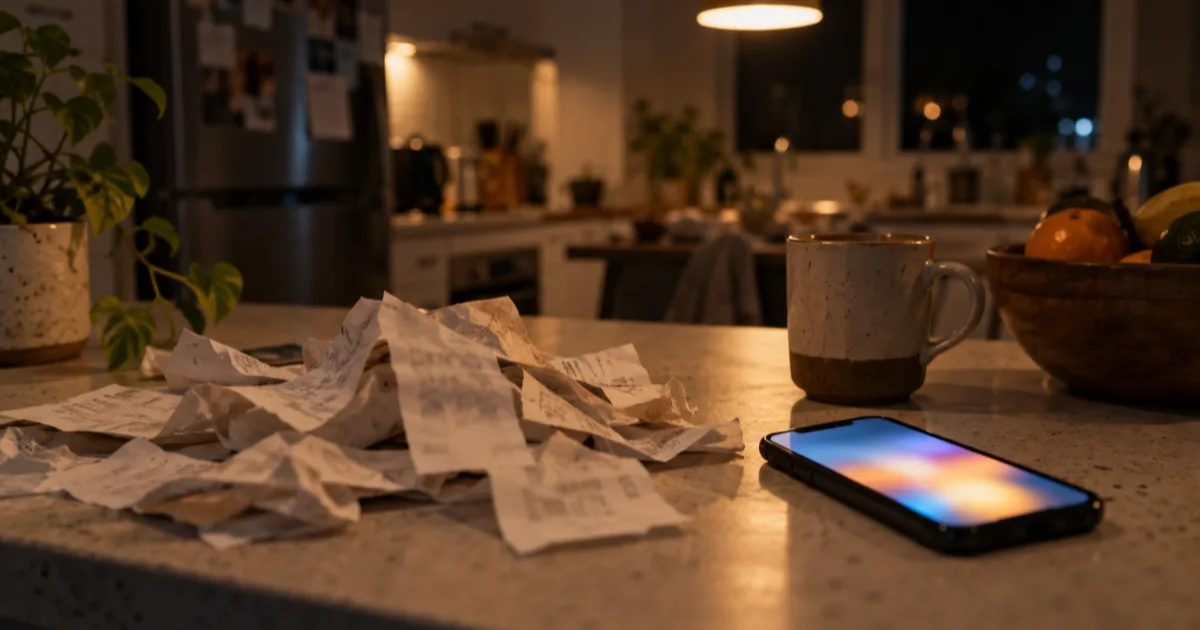
It's 11:14pm on 30 June and your phone buzzes on the bedside table. Then again. Then eleven more times in a row.
By morning there are forty-three photos in the client's upload folder, named IMG_4471.jpg through
IMG_4513.jpg. Some are sideways. Two are of the same receipt. One is mostly thumb. Four are
thermal-paper receipts from February that have faded to the colour of weak tea, photographed under
a kitchen pendant light that has put a bright white oval across the middle of each. There's also a
photo of a dog, which you assume was not meant to be deductible.
The easy reading of this is that the client is disorganised. It's the reading most practices settle on, because it's satisfying and it lets the process off the hook.
It's also mostly wrong. The client did exactly what the practice taught them to do: wait until the year ended, then send everything. The 11pm dump is the request working as designed.
The request is the problem, not the client
So the client does. On the one night they finally sit down with the shoebox, they send everything, in the format they have to hand, which is their phone's camera.
Nothing in that request told them that a receipt is easier to use in August than in June, that a faded thermal slip is worth photographing the day it's printed, or that half of what's in the shoebox is already on the bank statement and doesn't need to be sent at all. The client isn't failing to meet a standard. Nobody ever told them what the standard was.
If you've read our piece on why chasing documents is the real bottleneck, this is the same problem seen from the other end of the desk. The seven weeks of calendar time start here, with a request written for the practice's convenience rather than the client's.
What a once-a-year request actually costs you
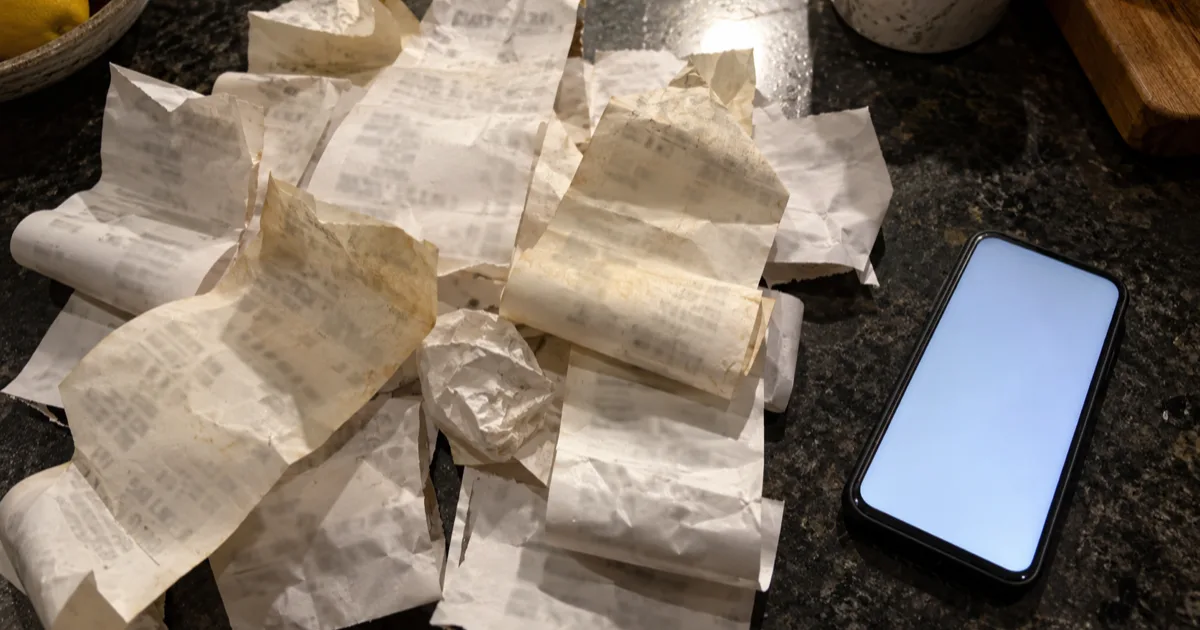
Unusable images. Glare, blur, a cropped total, a thermal slip that has faded past reading. The ATO is clear that it accepts photos of receipts as records, but the copy has to be a true and clear one. A photo where the amount sits under a reflection is neither, and it goes back to the client as a query.
No context. A receipt for $214 from a hardware store tells you a date and an amount. It doesn't tell you which property, whether it was a repair or a new item, or whether it's personal. Twelve months later the client doesn't remember either. Every one of those becomes a question, and every question is another round trip.
Duplicates of what you already have. A surprising share of the shoebox is spending that's already visible on a bank or card statement. The receipt might still matter for substantiation, but the preparer now has to match forty images against two hundred transactions to find out which is which, and that matching is where hours go.
One deadline, one bottleneck. When every client sends everything the same fortnight, the inbox doesn't fill gradually. It floods, and the files queue behind each other for reasons that have nothing to do with how hard they are. That's the same pile-up we described in the 15 May lodgment rush, only it starts in July.
Ask during the year, and ask for less
Ask quarterly, not annually. A short note at the end of each quarter — anything you've paid for the rental, the car or work since July? — catches receipts while they're still legible and the client still remembers what they were for. Four small requests are easier to answer than one enormous one, and they spread the work across your year instead of piling it into July.
Ask by category, not "everything". A client with a rental and a work car has two or three kinds of receipt that actually matter. Name them. "Repairs or anything bought for the property" is something a person can act on. "All your receipts" is an invitation to the shoebox.
Tell them what not to send. If an expense is clearly on the statement and you only need the receipt when something is unusual — a large purchase, something that might be capital, something split between personal and work — say so. Clients are relieved to be told they can send less, and the receipts that do arrive are the ones that needed to.
Ask for one line of context. A photo plus four words — "Unit 2, new hot water system" — saves a query later. Most phones let you add a caption or a note. Ask for it in the request, every time, and it starts arriving.
Make the photograph good enough the first time
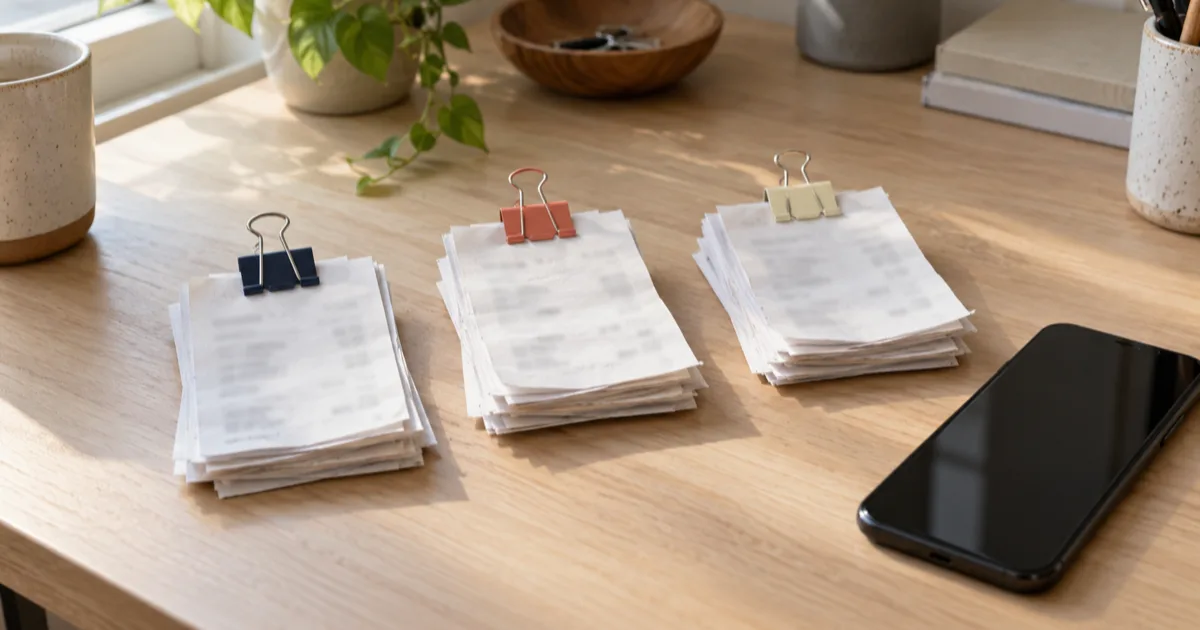
Something like: Lay the receipt flat on a dark surface. Turn off the overhead light if it's causing glare, and stand by a window instead. Make sure the date, the shop name and the total are all in the frame.
That is the whole of it. A client who has been told once that a dark tabletop beats a white bench will mostly do it from then on.
Thermal receipts deserve their own sentence, because they're the ones that disappear. Fuel, parking, hardware stores, most cafes. Ask clients to photograph those on the day, because the paper won't wait until June.
And give them somewhere to put the photos that isn't your inbox. A shared folder per client, a portal, anything that keeps a receipt attached to the right client and the right year rather than buried in a thread between a meeting invite and a newsletter.
Write the standard down for your own team too
Decide what happens when a receipt really is unreadable. Does the preparer query it, rely on the statement and note it, or leave it out? Any of those can be defensible. What isn't defensible is three preparers making three different calls on the same kind of receipt and none of them writing down which.
The workpaper should show it either way. A figure that rests on a bank statement line because the receipt was illegible is a perfectly good figure, as long as the paper says so. Our tax working paper templates carry a source reference on each line for exactly this reason: the reviewer can see what each number stands on.

Where BeforeMay fits
None of that replaces the part above. Ask earlier, ask for less, explain once what a usable photo looks like. The 11pm phone buzz on 30 June doesn't go away completely, but it gets a lot quieter.