Reading the workbook
What is in a delivered working paper, how a figure traces back to the document it came from, and what the delivery gate checked before you saw it.
The deliverable is an .xlsx. No macros, whatever the entity type — it opens in
Excel, in Numbers, and in whatever your reviewer already uses.
Lines carry their ATO item
Each section of the workbook says which ATO item it feeds, and each line under it is either reviewed or not. That is the unit of work: not "the case", but a line.
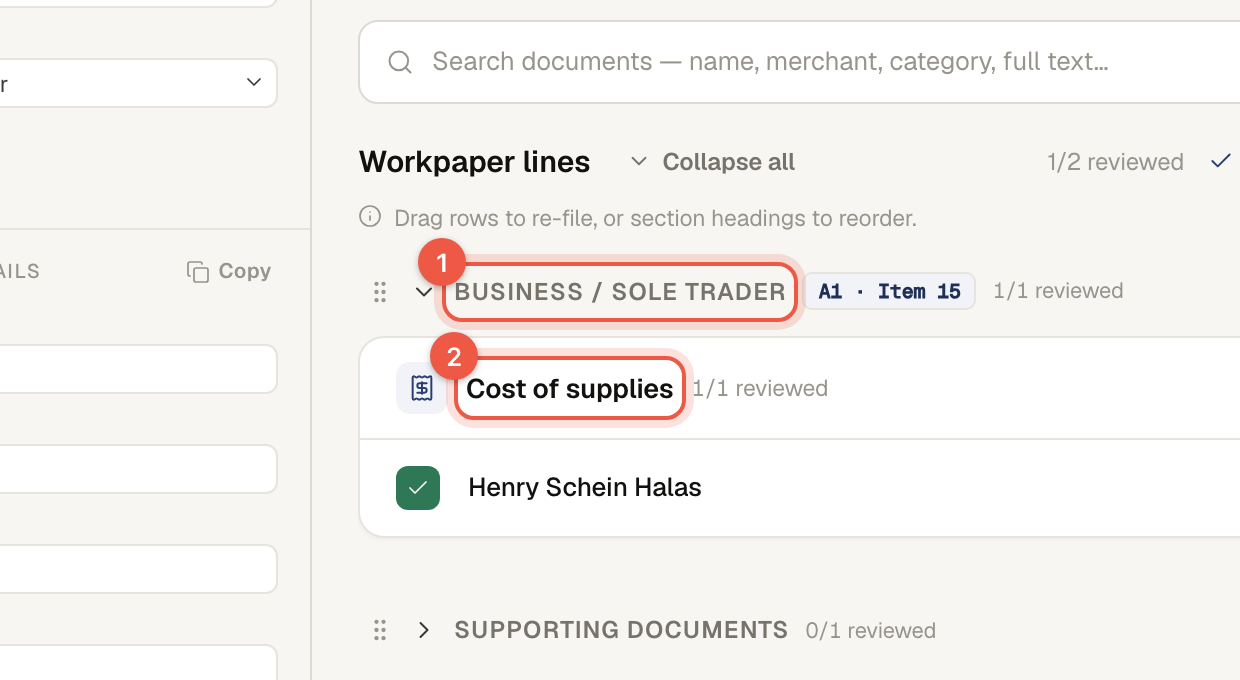
Every figure has a source
A number in the workbook is not an assertion. It carries the document it came from, and you can open that document from the cell. When a figure looks wrong, that link is the first place to go — more often than not the document says something the summary did not.
The build also keeps its own account of itself: how the paper was assembled, and a place to ask about any part of it.
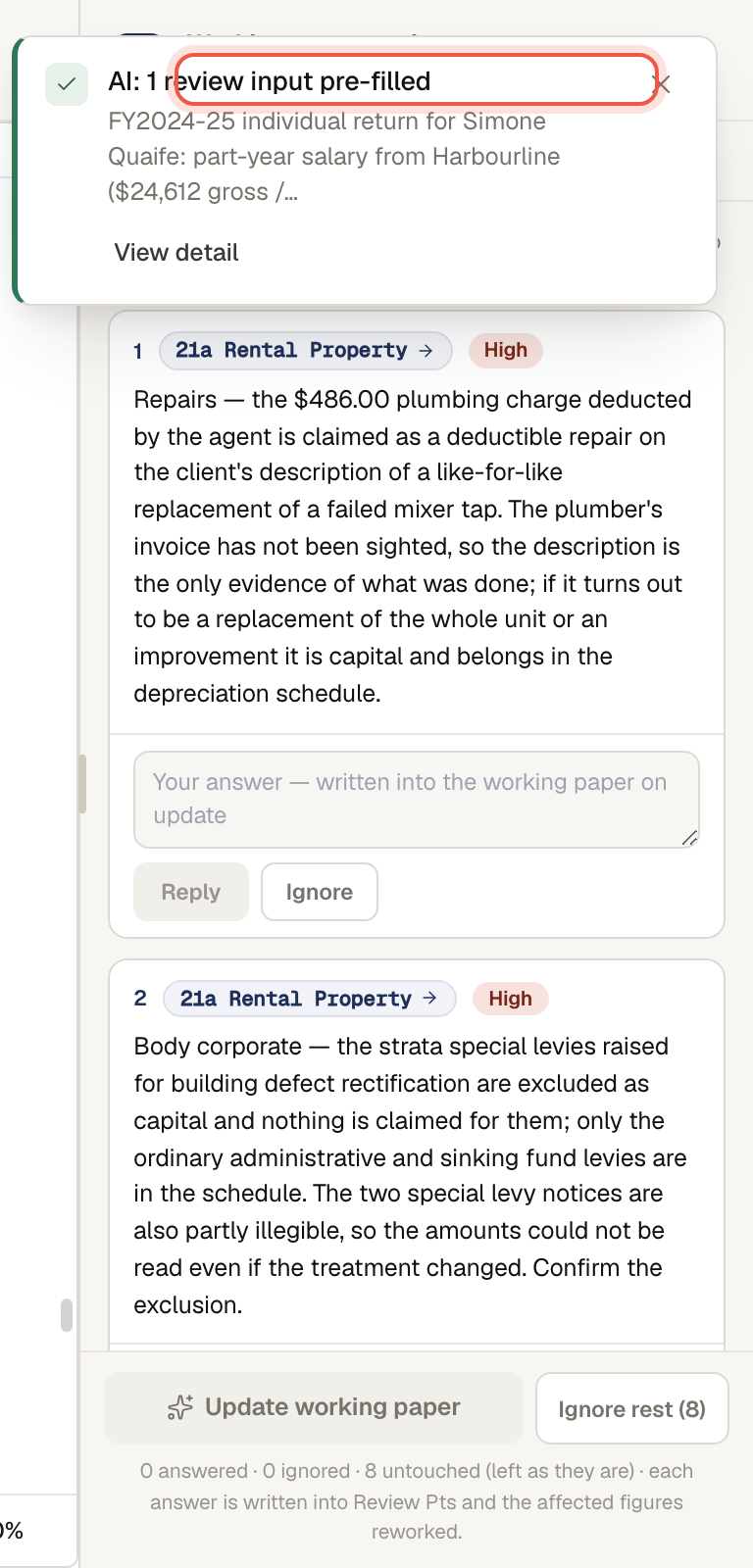
What was checked before delivery
The build does not hand over whatever the model produced. A gate runs first, and a workbook that fails it is not delivered:
- formulas recompute to the values stored in the file
- totals tie to the lines beneath them
- multi-document breakdowns tie to the figure they roll into
- nothing is clipped, hidden or left half-written
Formula integrity is a hard gate
If you ever see Formula integrity checks failed, the build stopped rather than deliver a workbook whose sums do not add up. That is the gate doing its job, not a bug in your case.
The estimate rail
The case page shows an estimate — Estimated tax payable, and the taxable income behind it — in the right-hand rail. It reads the delivered workbook, not a separate calculation, so the rail and the file cannot disagree.
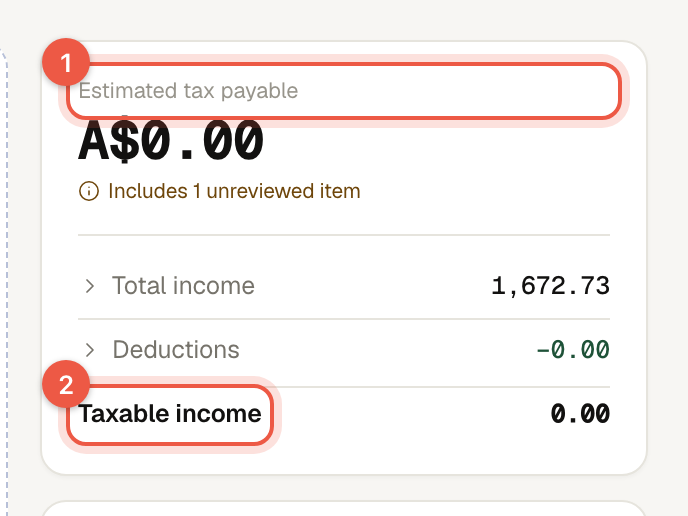
For company and trust cases the rail is empty until a build has run. That is expected: those entity types are built from the raw documents in one pass rather than read file-by-file, so there is nothing to estimate from beforehand.