Rental property sale: the cost base records
Selling a rental property? Rebuild the cost base from purchase, improvement and deduction records now, before the old file is archived.
The email arrives with the contract of sale attached and one line underneath it. "Sold the unit, settlement's in August. Bought it ages ago, should all be in your files."
It is in your files in the sense that eleven years of rental schedules are. The purchase was handled by the accountant before you. The bathroom was redone at some point the client describes as "after the tenants with the dog". The depreciation schedule, if there was one, is attached to an email from a firm that no longer exists.
That is the normal state of a rental property in the year it is sold. The cost base is built from documents spread across a decade and at least three sets of hands, and the sale year is the last year anyone is still motivated to find them.
So do it now. Rebuild the cost base from documents in the year the property sells, before the client archives the file and the vendor's statement goes in a skip, and put every figure you cannot support on the face of the paper as a gap rather than as an estimate.
The sale year is the last easy year to find the purchase
A contract signed in late June means the cost base work belongs in a file you may think is finished. Put the contract date on the front of the schedule, with the page it came from.
Then look at what you actually hold. The rental schedules are on file; the purchase usually is not, because it was a conveyancing matter and never passed through a return as a single line.
Build the cost base from documents, one element at a time
- What was paid. The contract of purchase and the settlement statement, which are not the same document and do not always show the same figure. Adjustments at settlement live on the second.
- Incidental costs. The ATO lists, among others, legal and conveyancing fees, stamp duty, transfer costs, search fees, valuation costs and agent's fees on the sale. Each needs an invoice or a statement line, at both ends of the ownership.
- Costs of owning. For a property that was rented the whole time, these were usually claimed as deductions year by year, and the ATO is clear that deductible costs stay out. This element tends to matter for a property that was not income-producing for some of the period, which is a question to ask, not to assume.
- Capital improvements. The renovation, the extension, the new driveway. Invoices, and a reason to believe each one was capital.
One detail from the same page worth carrying into the file: an amount someone else paid back is not yours to include. The ATO's example is a vendor agreeing to cover part of the buyer's legal costs. Settlement statements are exactly where that kind of credit hides.

The deductions you claimed come back into the calculation
The cost base page says costs you can claim a deduction for are excluded, and names capital works as an example. Its worked example on a loss subtracts the capital works deductions the owner claimed while holding the property. Whatever the exact treatment for your client's facts, the practical consequence is the same: the deductions taken in every earlier return are part of the sale-year calculation.
So the cost base file needs a schedule of what was actually claimed, year by year, traced to the returns as lodged. Not the quantity surveyor's projection, which assumes every year was claimed in full.
Depreciating assets are separate again: the ATO notes special rules apply to them and the cost base is not the measure. Carpets and appliances sold with the property need their own line, which means you need the asset register, not just the building figure.
Where a year's claim cannot be confirmed from the return, say so on the schedule. "2017 capital works claim not located in prior accountant's file; requested from client" is a review point. A figure interpolated from the years either side is a guess wearing a number's clothes.
Improvements need evidence, not a memory of a bathroom
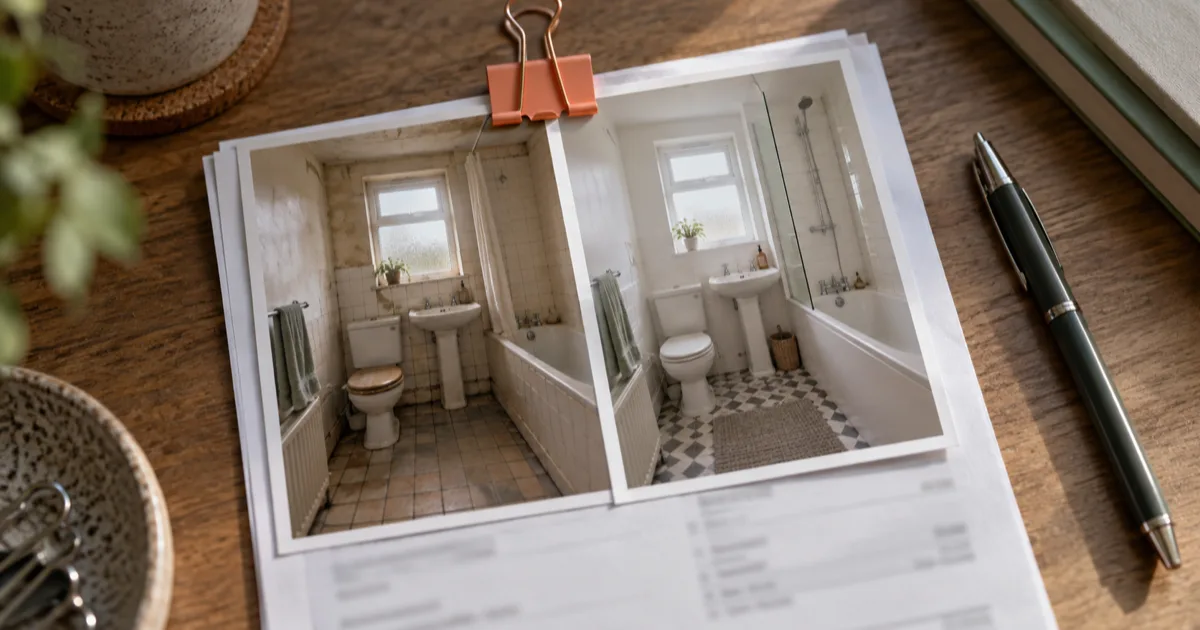
The ATO's rental records page lists documents, receipts and before-and-after photos for capital improvements among the records an owner should keep while they hold a rental. Photos are on that list for a reason. They are often the only thing that separates a capital improvement from a run of repairs, and the decision between the two was usually made, or not made, in the year the work happened.
Go back to that year's rental schedule before you ask for anything. If the bathroom was claimed as repairs at the time, the file has a problem that is not about the sale, and the partner needs to see it first. If it was treated as capital, there should be capital works claims from then on.
Ask the client for a specific list, once
Name each document and the reason you need it. A request that works looks something like this:
| Document | Why it is needed | Who probably has it |
|---|---|---|
| Contract of purchase and settlement statement | Purchase price and settlement adjustments | Client, or the conveyancer who acted on the purchase |
| Stamp duty assessment and legal invoices for the purchase | Incidental costs of acquisition | Client's email or the conveyancer's file |
| Invoices and photos for the renovation | Whether the work was capital, and what it cost | Client, or the builder |
| Depreciation schedule and prior returns | Deductions already claimed | Prior accountant |
| Agent's sale invoice and conveyancing on the sale | Incidental costs of the sale | Selling agent, conveyancer |
| Any period the property was lived in or not rented | Whether some costs of owning are relevant | Client |
That last row is a question, and it should read as one. The ATO's records page lists personal-use and main residence periods among the records to keep, which tells you the answer matters.
Send it once, in the week the contract arrives. Chasing is usually the bottleneck, but a sale is the one time a client will actually go and look.
What the paper should show when it is handed over
Where did each figure come from? A document and a page, the same standard as any working paper that survives review. Which figures are missing, and what was asked for? Listed, with the date of the request. Which judgements were made? The capital versus repairs call on the renovation, the treatment of any private-use period, the year the event fell in, each written as a decision with its reason.
A cost base that totals neatly with three estimated lines inside it looks finished. It is the most expensive kind of unfinished: the next person to ask for the purchase documents may be the ATO, by which time the archive box really has gone.
The final months of rent still need doing properly, too; our post on reconciling rental statements covers that half.
Where BeforeMay fits
You can see how the schedules are laid out on the working paper templates page. Whatever holds the file, the test is the same: pick any line of the cost base and find the piece of paper behind it, this year, while the paper still exists.