BeforeMay Verify
Request identity evidence and review the wider due-diligence record.
Source reviewed Product documentation
Open Verify. Verify shares the practice, client directory and team. It requests identity evidence through Didit and keeps a result and event record for the practice.
Choose the purpose
Proof of identity and AML/CTF due diligence are different purposes. A photo-ID result does not establish that every required screening or assessment has been completed. For a company or trust, verify the relevant people through its client record and review the recorded ownership and control relationships.
Use the identity-check tutorial to create and send a check.
Read the evidence, not only the status
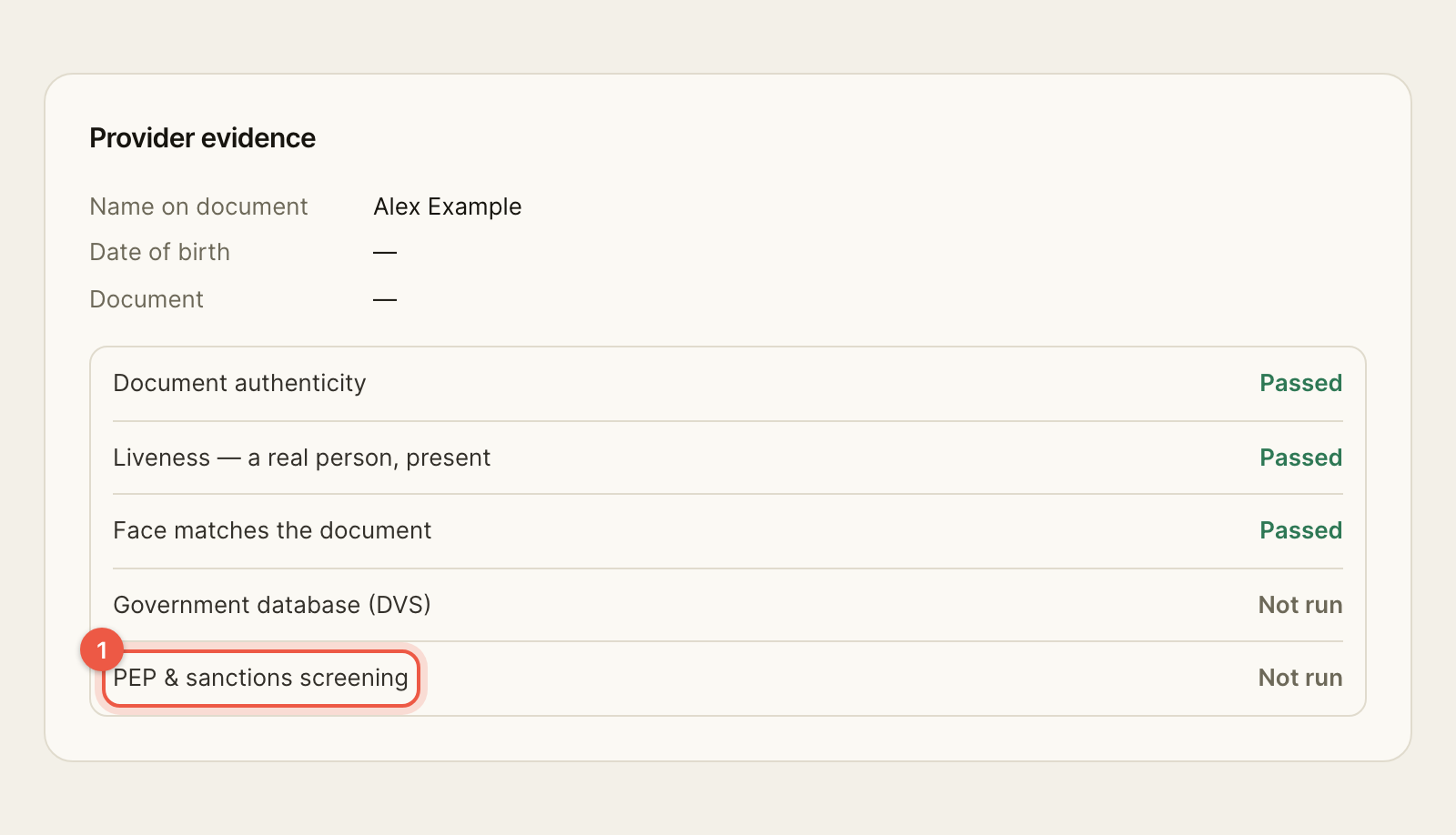
The check page separates document authenticity, liveness, face match, government database evidence and PEP/sanctions screening. The available evidence depends on the configured provider workflow. Not run is not a pass. Verified is the provider's overall identity outcome, not your firm's final CDD or risk decision.
Inspect possible screening matches and provider notes. Record the scope and risk assessment, supporting evidence and any required sign-off. Reassessment adds a record so earlier assessments remain visible. Use Export CDD record to retain the client's evidence summary.
Keep the record current
When available, ongoing monitoring can raise a Needs review alert. Review the changed evidence and record why you acknowledge it. A failed refresh leaves the last stored result visible; it has not produced a fresh clearance. The review-due date follows the recorded risk and review settings and needs to fit your practice's program.
Where the ID goes
The person consents on the client page and provides their ID image, selfie and liveness capture directly to Didit. The Privacy Policy describes processing in the European Union. BeforeMay keeps the result summary rather than those biometric images. Workpapers' outbound AI redaction process is not this identity-check flow.
Verify helps organise evidence. Your practice decides the service's scope, the client's risk and whether further work or approval is required.